
Artifact: Original Academic Stress and Burnout Module
.In 2018, I was one of the first Student Learning Assistants at the UCCS Academic Commons. The grad students running the program offered those of us who wanted it a chance to design and teach a short class on a topic of our choosing. I was a psych major, so I picked academic burnout and developed an informational slide deck using peer-reviewed research. There was no talk of needs analysis or outcome objectives, perhaps because it never got that far.
None of us ever got a chance to present our workshops, and we were never given a reason for the program being canceled. I have a theory that once the program reached upper-level faculty, they pointed out to the grad students running it that having a group of unqualified undergraduate students presenting mental health content to other undergraduates was wildly irresponsible and a huge liability.
You can learn more about the full redesign here.

A Short Analysis
Existing Document: A word document containing the text broken down by slide, and my 2018 research notes.
Reconstructed Document: The PowerPoint slide deck. Since I no longer have the original, but have the text it contained, I chose a basic theme and recreated it.
Lost Documents: The coping-strategies handout. The counseling center information sheet.
Never Existed: A needs analysis, promotional material, evaluation, a delivery session.
What Can Carry Forward: The information presented is all grounded in peer-reviewed literature which is cited in the last slide.
The Slide Deck
Slide 1: Academic Burnout: Recognizing It and What To Do About It
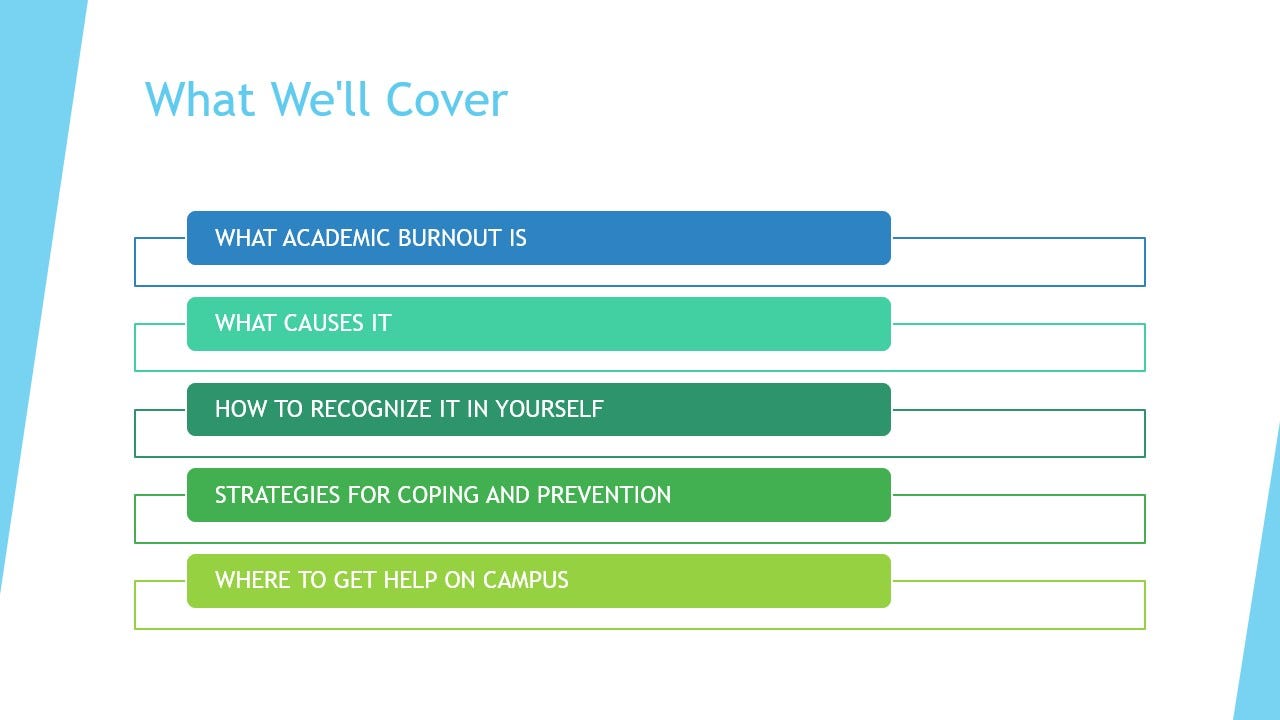
Slide 2: What We’ll Cover
What academic burnout is
What causes it
How to recognize it in yourself
Strategies for coping and prevention
Where to get help on campus
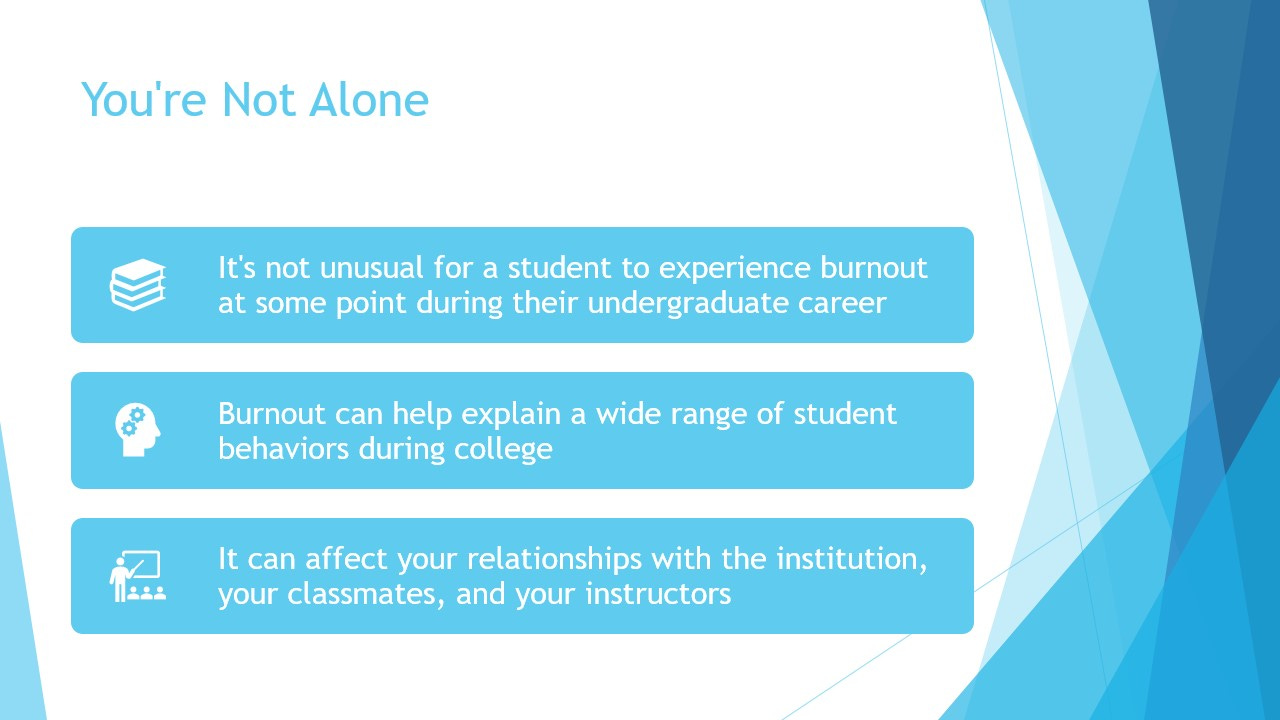
Slide 3: You’re Not Alone
It’s not unusual for a student to experience burnout at some point during their undergraduate career
Burnout can help explain a wide range of student behaviors during college
It can affect your relationships with the institution, your classmates, and your instructors
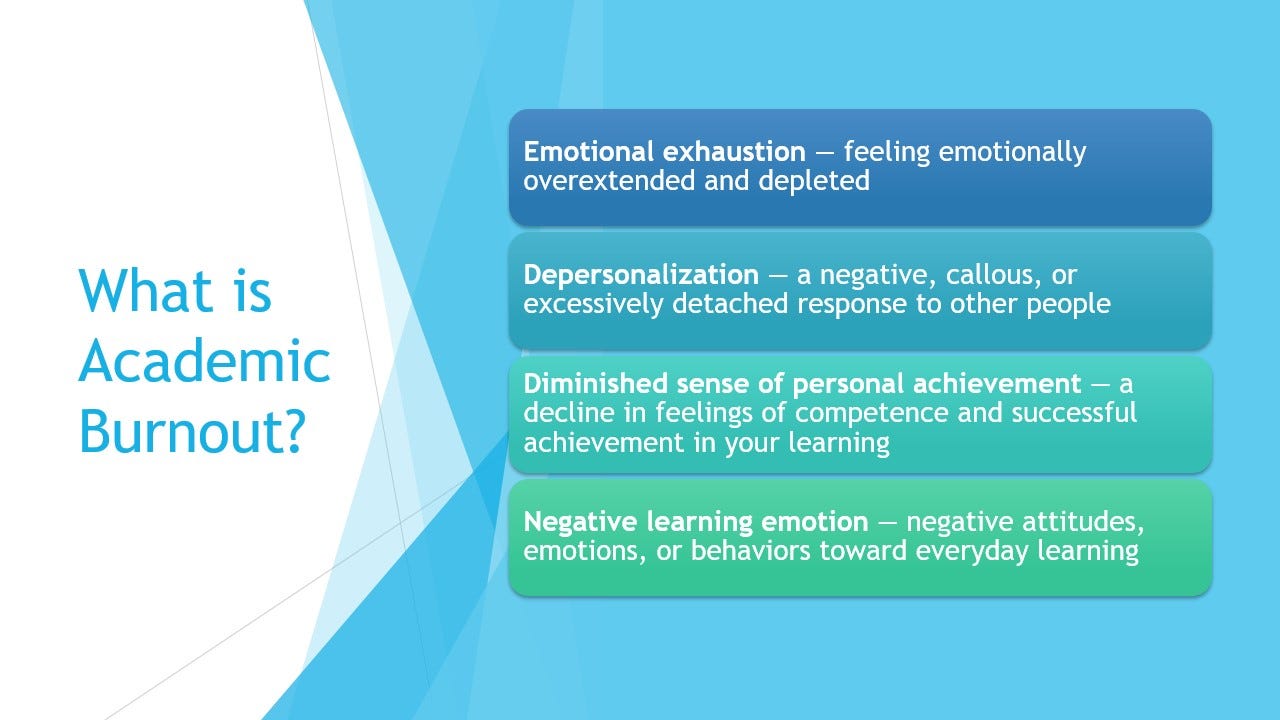
Slide 4: What is Academic Burnout?
Emotional exhaustion — feeling emotionally overextended and depleted
Depersonalization — a negative, callous, or excessively detached response to other people
Diminished sense of personal achievement — a decline in feelings of competence and successful achievement in your learning
Negative learning emotion — negative attitudes, emotions, or behaviors toward everyday learning
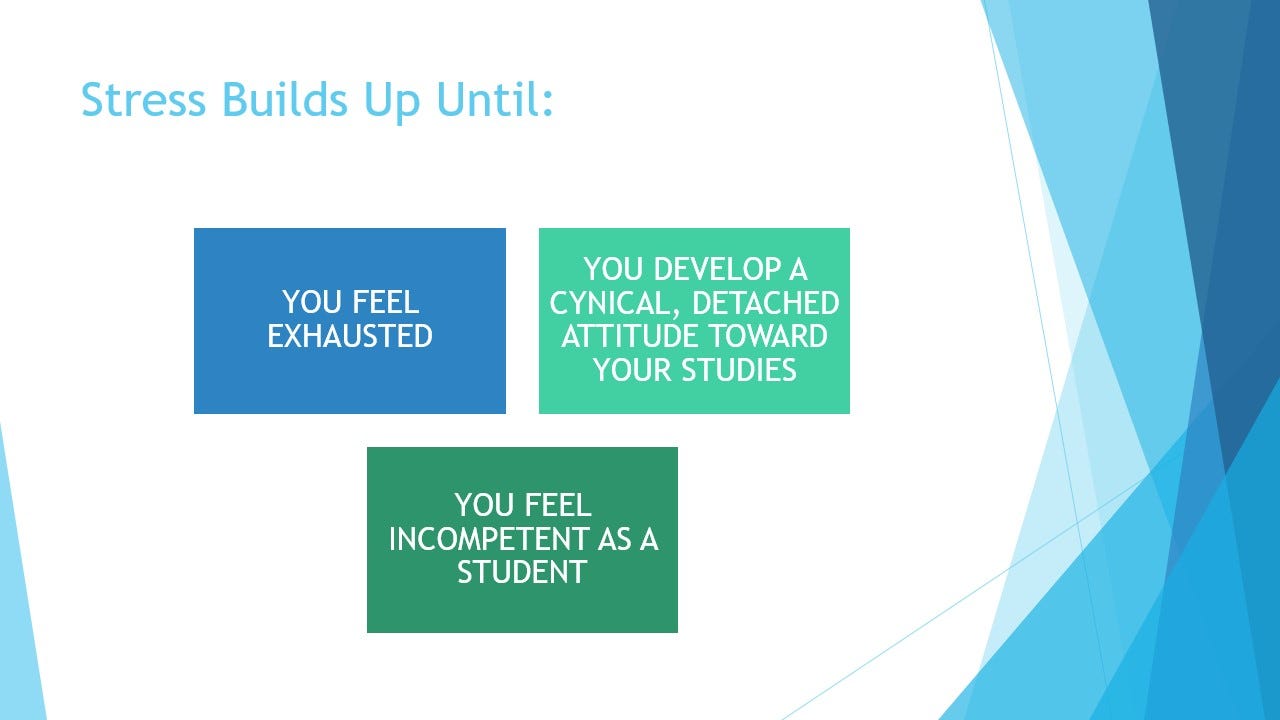
Slide 5: Stress Builds Up Until:
You feel exhausted
You develop a cynical, detached attitude toward your studies
You feel incompetent as a student
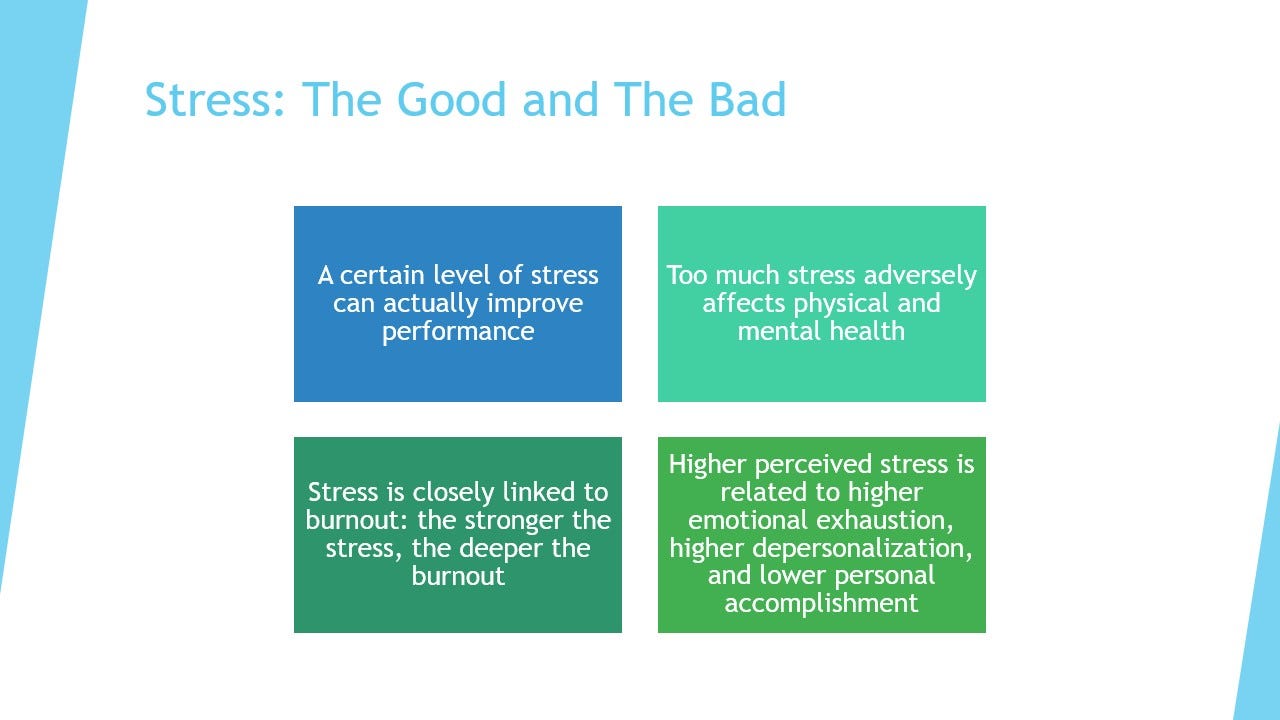
Slide 6: Stress: The Good and The Bad
A certain level of stress can actually improve performance
Too much stress adversely affects physical and mental health
Stress is closely linked to burnout: the stronger the stress, the deeper the burnout
Higher perceived stress is related to higher emotional exhaustion, higher depersonalization, and lower personal accomplishment
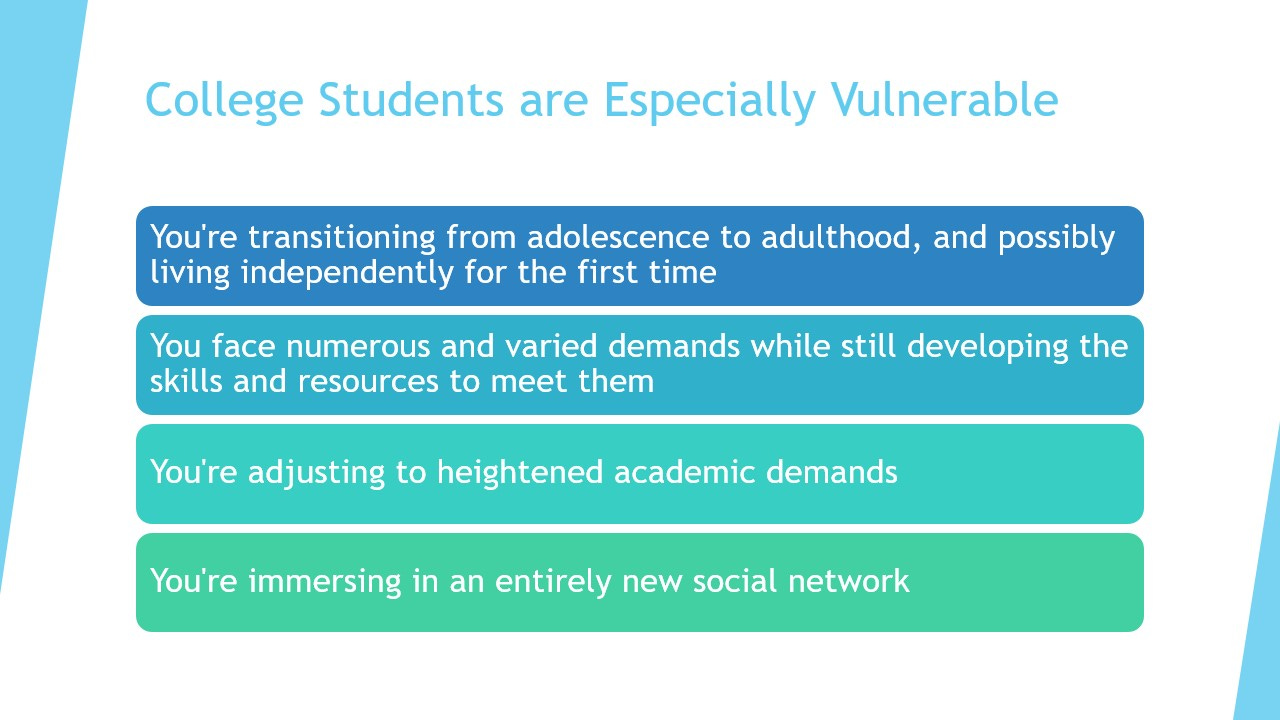
Slide 7: College Students are Especially Vulnerable
You’re transitioning from adolescence to adulthood, and possibly living independently for the first time
You face numerous and varied demands while still developing the skills and resources to meet them
You’re adjusting to heightened academic demands
You’re immersing in an entirely new social network
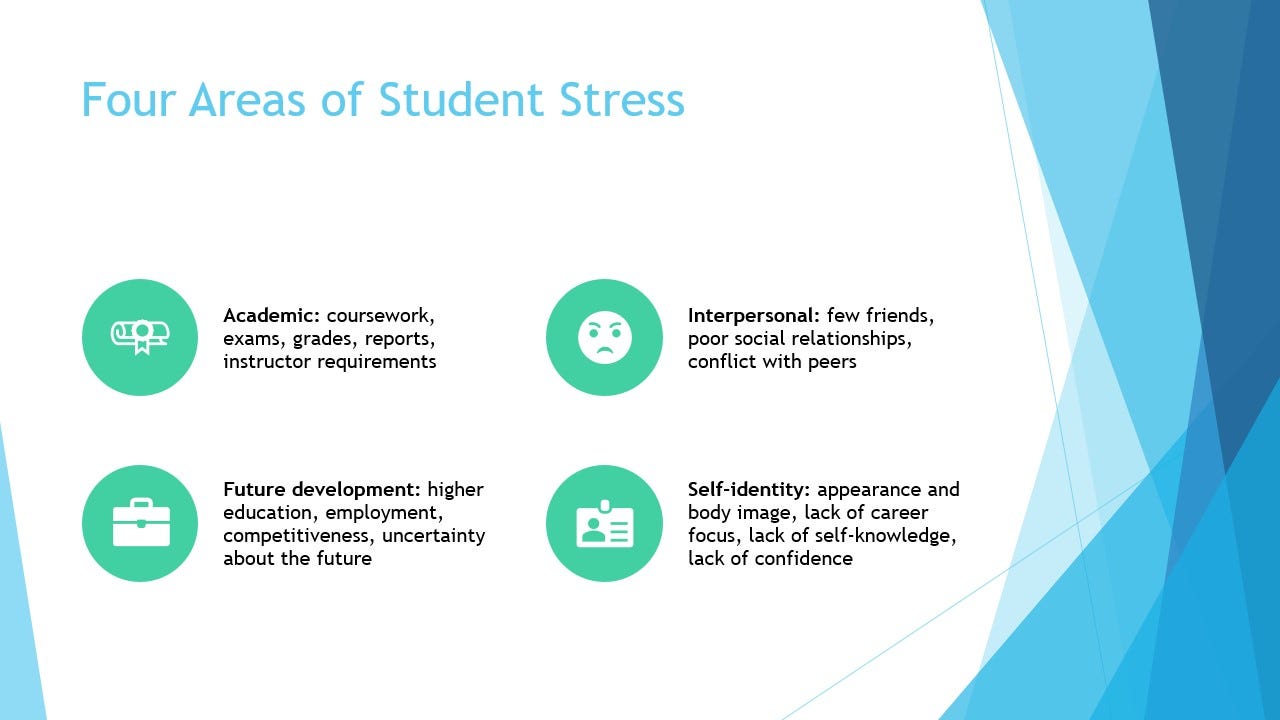
Slide 8: Four Areas of Student Stress
Academic: coursework, exams, grades, reports, instructor requirements
Interpersonal: few friends, poor social relationships, conflict with peers
Future development: higher education, employment, competitiveness, uncertainty about the future
Self-identity: appearance and body image, lack of career focus, lack of self-knowledge, lack of confidence
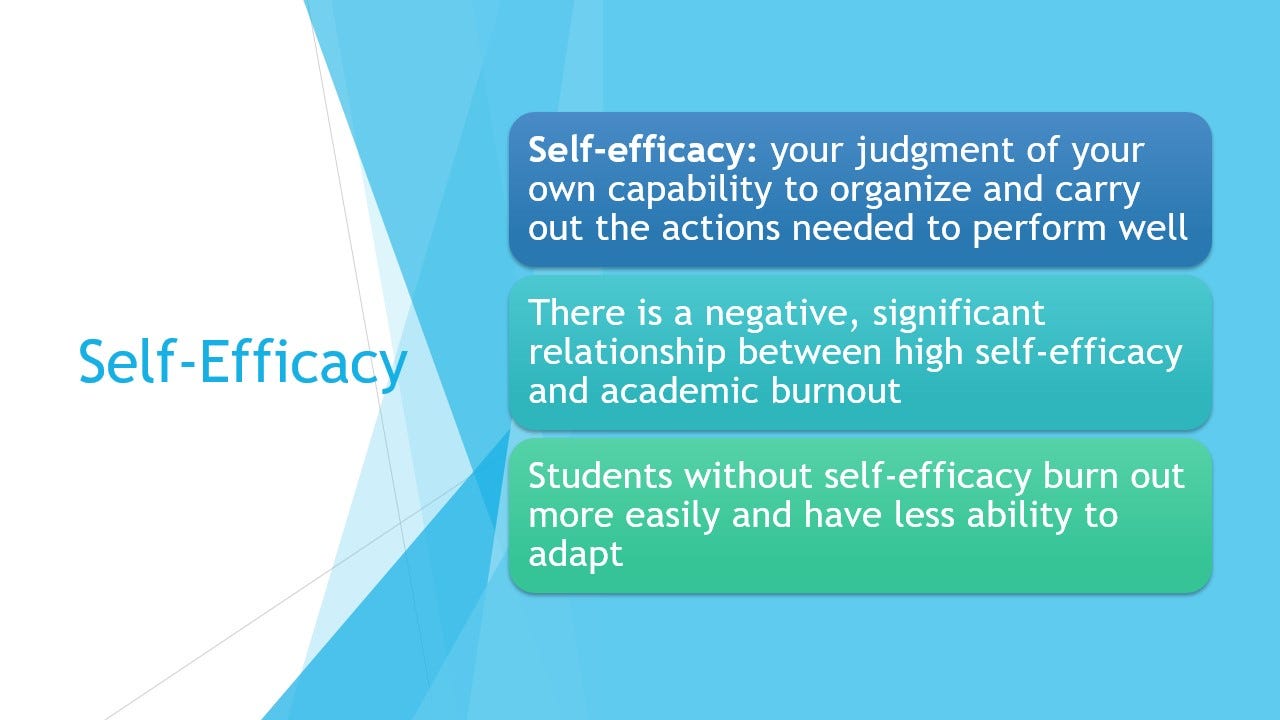
Slide 9: Self-Efficacy
Self-efficacy: your judgment of your own capability to organize and carry out the actions needed to perform well
There is a negative, significant relationship between high self-efficacy and academic burnout
Students without self-efficacy burn out more easily and have less ability to adapt
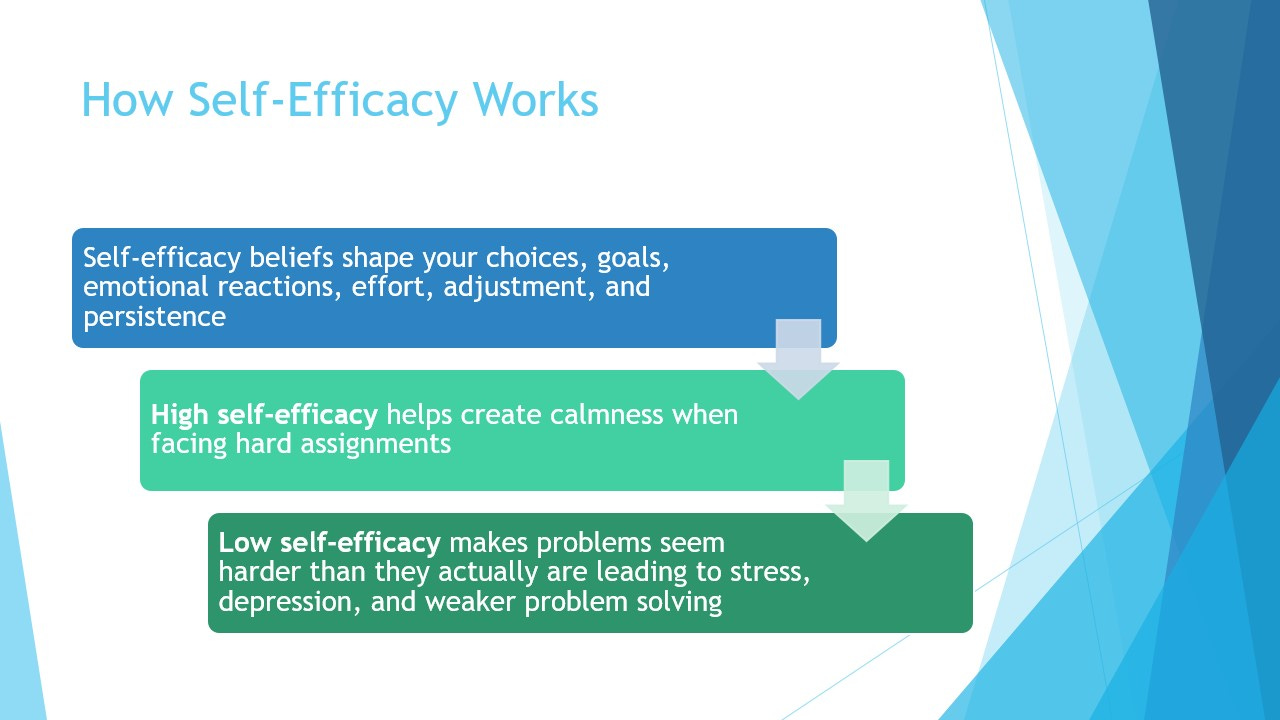
Slide 10: How Self-Efficacy Works
Self-efficacy beliefs shape your choices, goals, emotional reactions, effort, adjustment, and persistence
High self-efficacy helps create calmness when facing hard assignments
Low self-efficacy makes problems seem harder than they actually are leading to stress, depression, and weaker problem solving
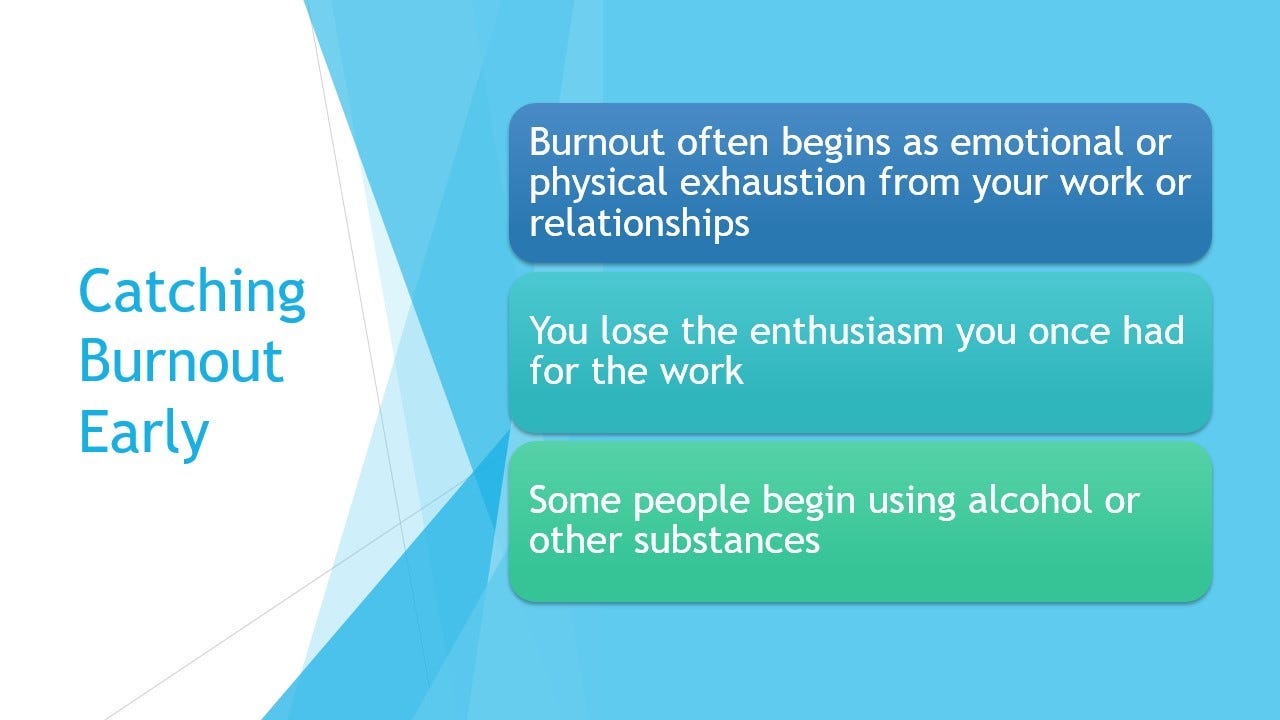
Slide 11: Catching Burnout Early
Burnout often begins as emotional or physical exhaustion from your work or relationships
You lose the enthusiasm you once had for the work
Some people begin using alcohol or other substances
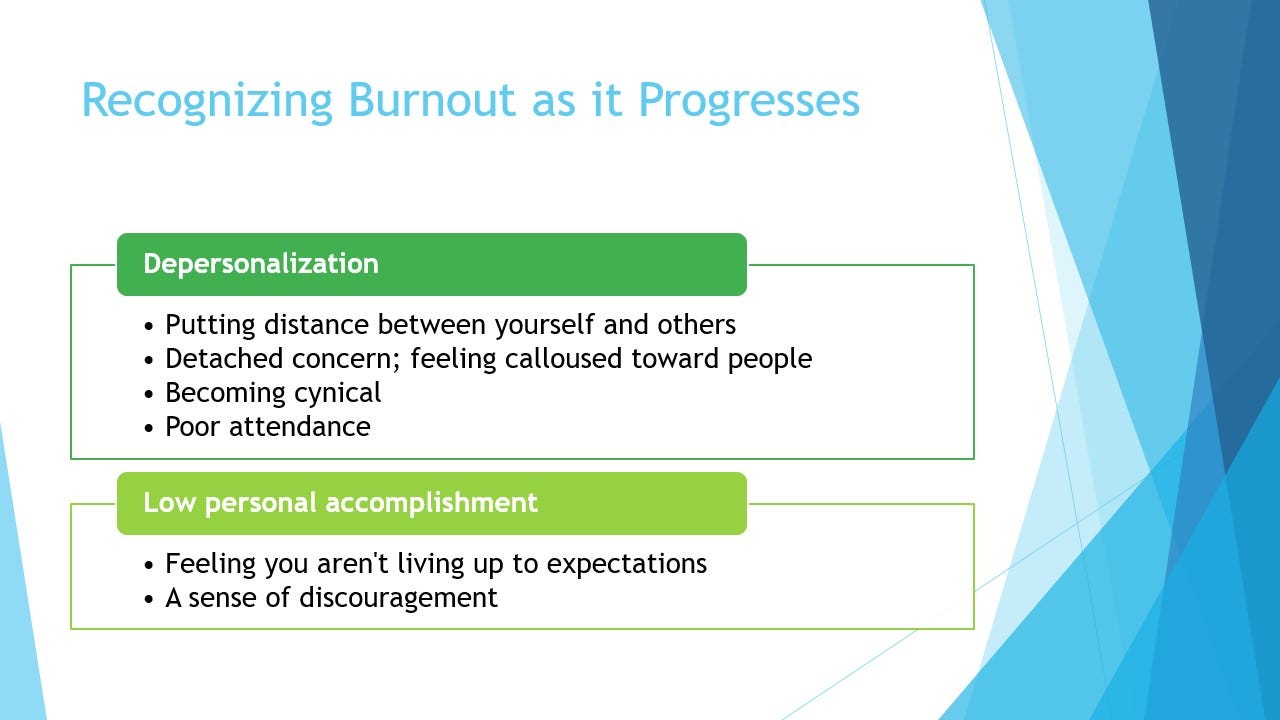
Slide 12: Recognizing Burnout as it Progresses
Depersonalization
Putting distance between yourself and others
Detached concern; feeling calloused toward people
Becoming cynical
Poor attendance
Low personal accomplishment
Feeling you aren’t living up to expectations
A sense of discouragement
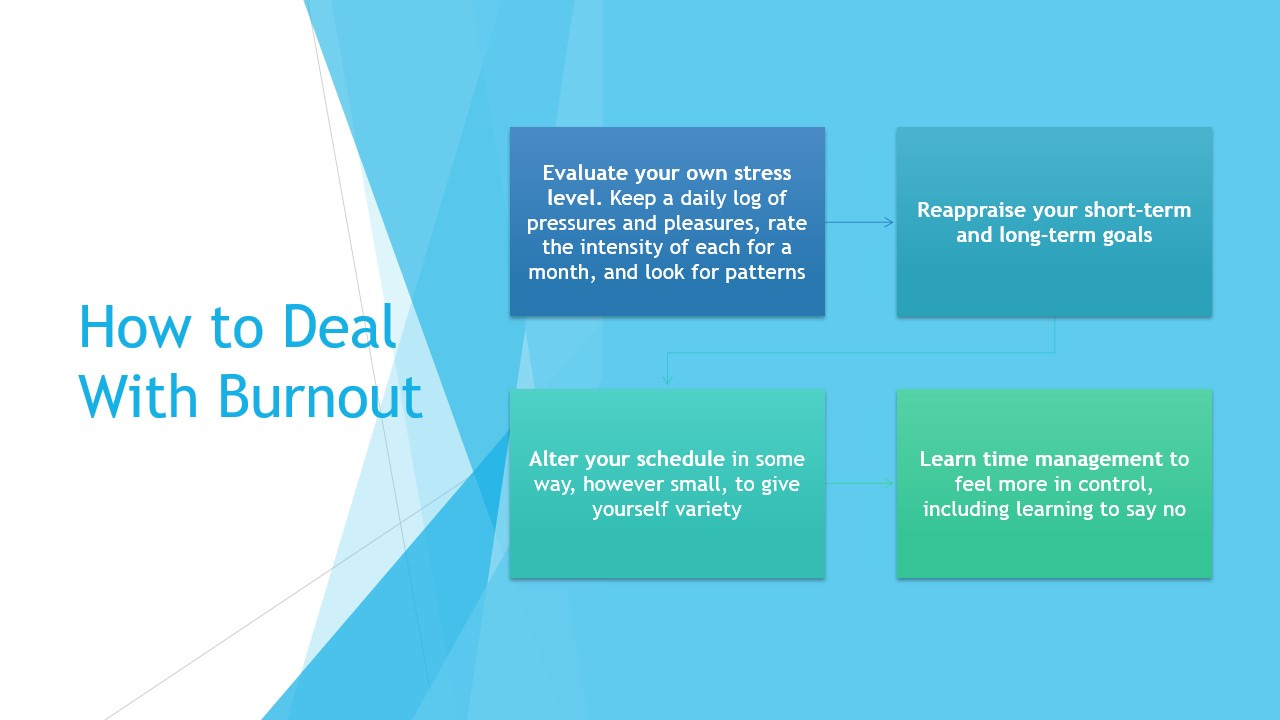
Slide 13: How to Deal With Burnout
Evaluate your own stress level. Keep a daily log of pressures and pleasures, rate the intensity of each for a month, and look for patterns
Reappraise your short-term and long-term goals
Alter your schedule in some way, however small, to give yourself variety
Learn time management to feel more in control, including learning to say no
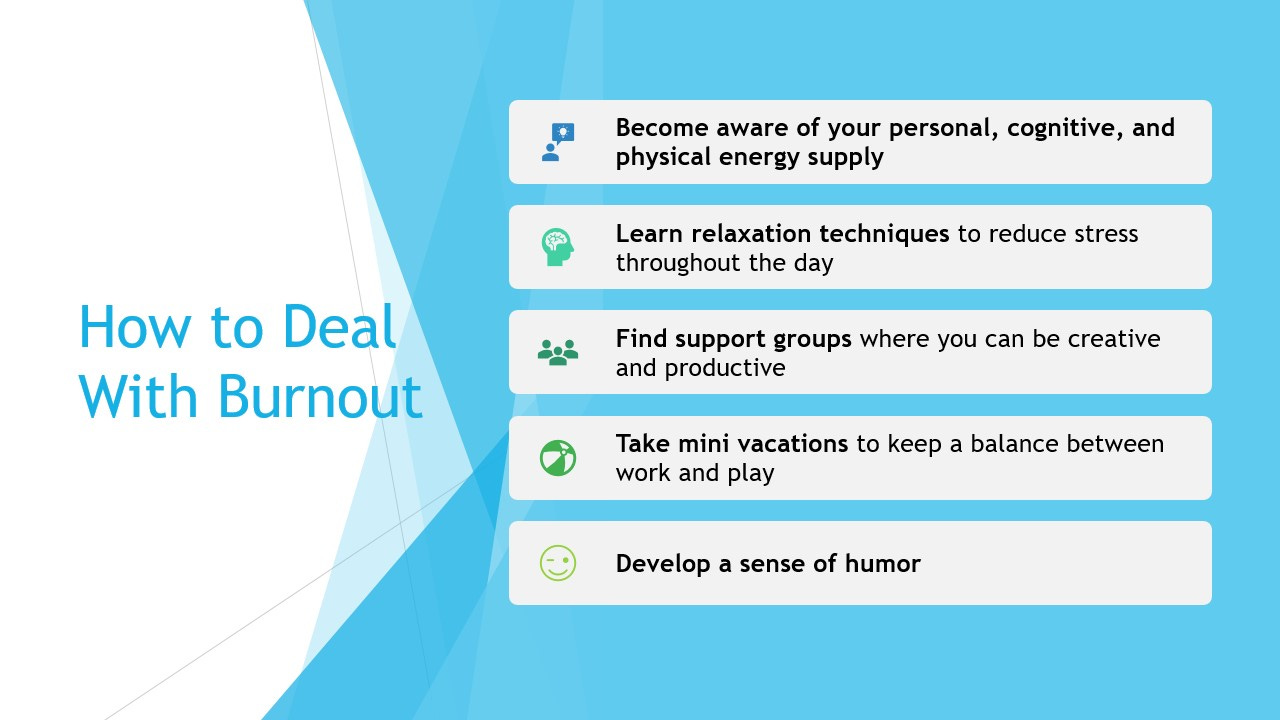
Slide 14: How to Deal With Burnout
Become aware of your personal, cognitive, and physical energy supply
Learn relaxation techniques to reduce stress throughout the day
Find support groups where you can be creative and productive
Take mini vacations to keep a balance between work and play
Develop a sense of humor
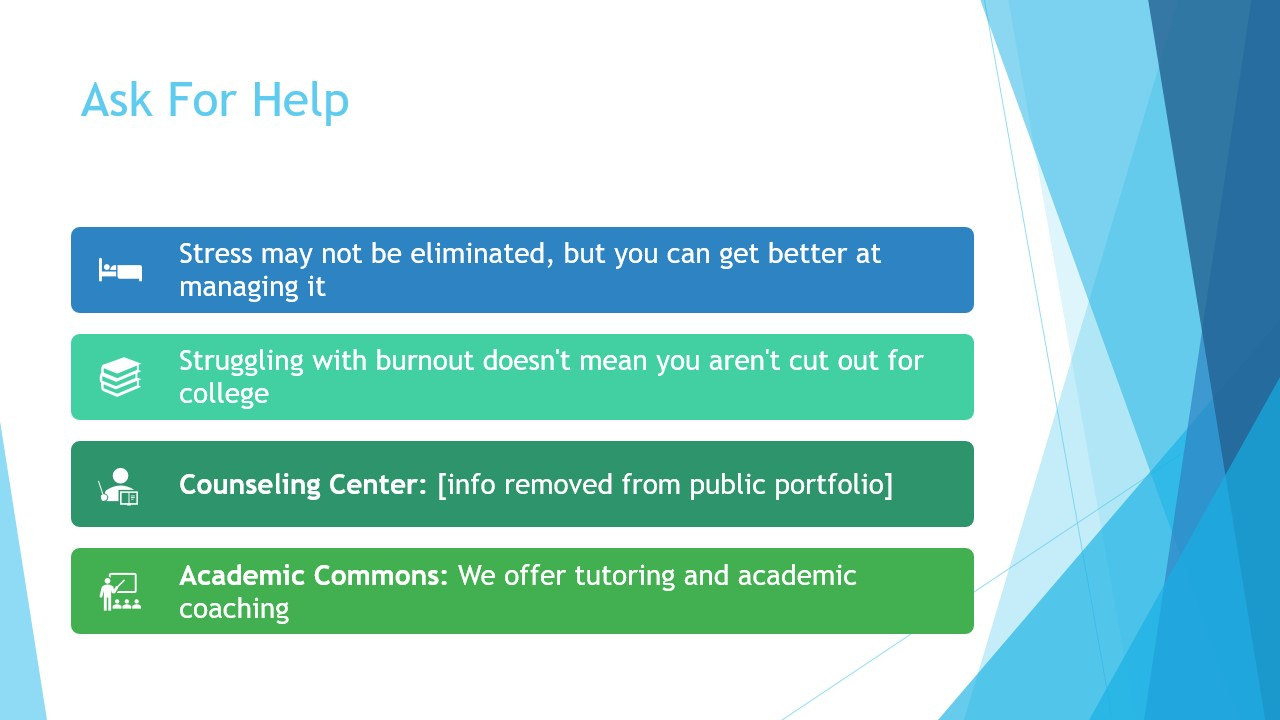
Slide 15: Ask For Help
Stress may not be eliminated, but you can get better at managing it
Struggling with burnout doesn’t mean you aren’t cut out for college
Counseling Center: [info removed from public portfolio]
Academic Commons: We offer tutoring and academic coaching
Slide 16: Questions & References
Gold, Y. (1988). Recognizing and coping with academic burnout. Contemporary Education, 59(3), 142.
Lin, S. H., & Huang, Y. C. (2014). Life stress and academic burnout. Active Learning in Higher Education, 15(1), 77–90.
Rahmati, Z. (2015). The study of academic burnout in students with high and low level of self-efficacy. Procedia — Social and Behavioral Sciences, 171, 49–55.